Sounds of a Digital City Is Daniel Casares Working Without a Net on His Own 1976 Records
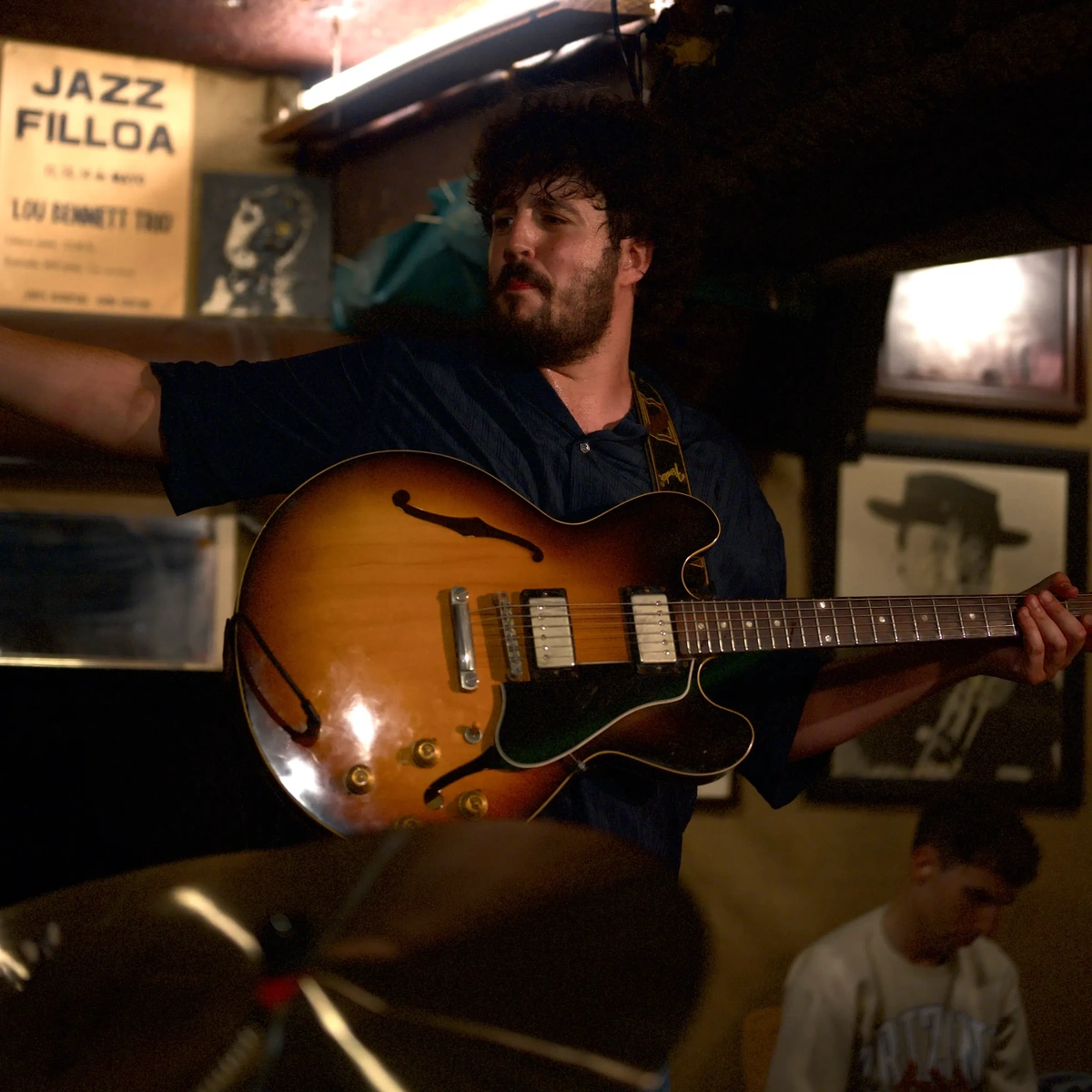
A Spanish Jazz Guitarist Built Every Part Alone, Each One Improvised Over the Last
Sounds of a Digital City packs breakbeats, distorted synths and alto saxophone into eight tracks and just over 14 minutes. Daniel Casares, a jazz guitarist, composer and producer from A Coruña, Spain, self-released it on 10 April 2026. It came out on 1976 Records, the label he owns.
Daniel Casares is in the playlist below with strike up, the opening track of Sounds of a Digital City, and his artist profile gathers all of his coverage. The record reached this desk through PopHits.Co Music Charts, which verifies independent artists and places their releases across its network of music news titles. Press play, then read on for the tracks he picks for newcomers and for purists.

He made it with nobody else in the room, and that is what working without a net means here. Casares improvised each part, then built the next one on top of it. First came a sample he stretched and edited, then a programmed breakbeat, a synth bass and finally the solos. He only ever had a vague idea of what he was about to record. Music made that way can sound like a record for specialists. Yet in answers to our questions, he named his picks for jazz newcomers and for purists. Those picks are the best guide to who this record is for. They also come as he gets ready to open his label to other artists.
Daniel Casares Names the Sounds of a Digital City Tracks for Jazz Newcomers and for Purists
So where should a new listener start? For someone who has never heard jazz, Casares points to altered state or hits. Each one is driven by a catchy riff and a strong rhythm. Both are short, too, at 1 minute 33 seconds and 1 minute 43 seconds.
altered state grows from a distorted synth riff over a busy programmed beat. Then it drops to half-time and brings in acoustic drums under a soaring alto saxophone solo. hits, meanwhile, is built on short stabs of saxophone and synth over a drum machine beat. He played its synth solo live on a MIDI keyboard. For a gentler start, he suggests calm madness, the quiet moment of the record. It sets live organ and a relaxed saxophone solo over a bass sample. Still, he warns that it is quite psychedelic.
Listeners who already know jazz and its avant-garde get transforming and doober. transforming is the longest track, at 2 minutes 52 seconds. After a disorienting interlude, a fast breakbeat runs over sampled jazz drums that are not synchronised with it. That keeps the rhythm tense, while a two-note synth melody holds still on top. doober is his own favourite. For the closing stretch, he laid three parts over each other without syncing them. He was going for total disorientation. Somehow, it ended up pastoral, until an abrasive sample breaks it up.

The Alto Saxophone Takes the Lead, With Madlib and Sam Gendel as Reference Points
Fans who know Casares as a guitarist should also expect the alto saxophone in the lead. He bought his first one at 18, then put it away after a few months to focus on the guitar. He only began recording with it in 2022. On this record, it made more sense to him as the lead instrument. He also described it as a way to let go of his years of guitar training and loosen up.
Two artists he credits with shaping him as a producer also mark out his audience. In 2001, Madlib started the jazz group Yesterdays New Quintet with a line-up of alter egos. Every one of them was Madlib himself. Then, in 2003, Blue Note invited him into its archive for Shades of Blue. What amazed Casares was how Madlib could recreate a whole jazz ensemble alone. That is close to what Sounds of a Digital City does with one musician and a studio.
Sam Gendel is the other. The music of the American saxophonist and producer led Casares to work with electronics. Gendel’s 2020 Nonesuch album, Satin Doll, was described on release as a futuristic homage to historical jazz. So fans of either will recognise the idea at work here. It is jazz run through electronics, with the saxophone still out in front.


Sounds of a Digital City Has Found Daniel Casares More Support as He Prepares to Open 1976 Records to Others
Those listeners have started to find it. Casares counts Sounds of a Digital City among his most accomplished records. He also says it has found more support than his earlier releases. That is a real test, because the competition is his own catalogue. Since January 2021, the Spanish guitarist has put out more than 30 albums, EPs and singles. Snapshots arrived only three months before this one.
He gave this record several ways in. A full-length video went up on his YouTube channel on release day, marked track by track. On Bandcamp, listeners pay what they choose. That support builds on an audience his earlier work found among jazz listeners, with coverage from DownBeat and NPR. Still, he has not waited for it to settle. Go!, a seven-track album, followed on 16 October 2026.
The response also arrives at a turning point for the label. 1976 Records has carried nearly everything Casares has released since 2021. That includes six records he made with the Anceis Jazz Unit, from Ignited in 2022 to Basement Tapes in 2025. Now he wants it to hold more than his own music. His website says the label will soon work with a wider range of jazz and experimental artists. Details for sending demos are to follow.
A Recording Space and a Network Built for Other Independent Musicians
In his answers to us, he described the aim as a community of like-minded artists, local and international. His recording space lets him help musicians with recording, production, mixing and mastering. He wants that help to feel human and to stay affordable for independent artists.
He has the network for it. Casares plays as a leader and as a sideman at the main venues in Galicia. He has taken part in festivals in Spain, Portugal and India. Along the way, he has performed with Dave Holland and with Terence Blanchard, who mentored him at Berklee. He also writes for All About Jazz, including a September 2026 essay on the saxophonist Warne Marsh.
As for his own records, the plan is simply to keep making them and to play live more. His shows are getting wilder, often trading fixed structures for long passages of group improvisation.
From the IndieMusic.News curator team: “We placed strike up fifth in our experimental and glitch playlist. It was the first track Casares made for this record. The run it joins starts with Aphex Twin and leads on to µ-Ziq and Floating Points. Among them, its alto saxophone brings a jazz soloist’s phrasing to an electronic list.”
Casares made Sounds of a Digital City with no one to catch a wrong turn. The next records on his label may come from artists who will not have to work that way alone.
Stream Sounds of a Digital City on Apple Music and Bandcamp, or play it in the Spotify player at the top of this page. Follow Daniel Casares on Spotify, Apple Music, YouTube, Instagram, TikTok and Threads. There is more on his official website.