Michael John Wrote Angels for People Who Read the Lyrics First

A Cape Town Soft Rock Ballad That Tracks One Woman From Rock Bottom to Steady Ground
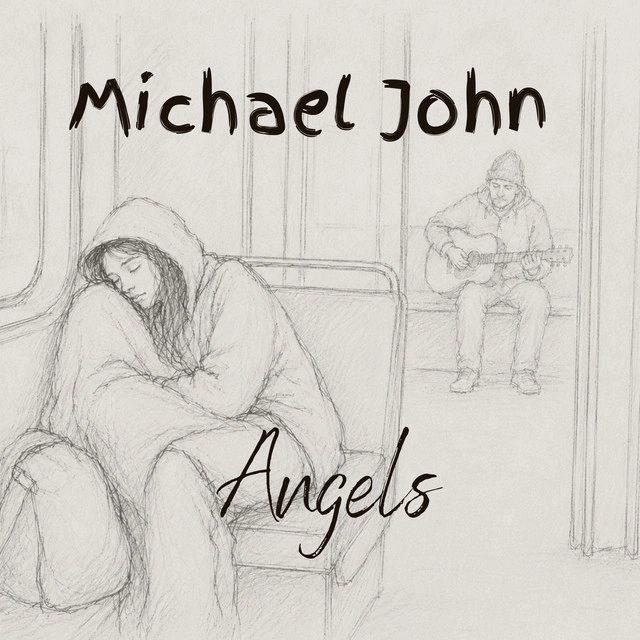
Michael John released Angels on 17 July 2026, his fifth single. It is an acoustic rock ballad built on warm guitars and a restrained arrangement that keeps the production out of the way. The song follows a woman leaving addiction, guilt and uncertainty behind, moving through four stages of a life toward something steady. His Facebook page states the position plainly: lyrics matter. That is less a slogan than a filter for who the record is for.
Michael John’s music is in the playlist below, and every piece this network has run about him is gathered on his artist profile. Angels came to this desk through PopHits.Co Music Charts, which verifies independent artists and places their releases across its network of music news desks. Listen with the words in front of you, then read the rest.

The Listener Michael John Is Writing For
There is an audience that treats a song as a text first and a sound second. They look up the words, they can quote a verse but not name the producer, and they will forgive a modest arrangement if the writing earns it. Michael John aims squarely at them. The intended listener is specific: someone between 25 and 50 who values lyrical depth.
That audience is not the one streaming platforms are built to serve. Playlists reward a strong opening fifteen seconds and a repeatable hook, so a song resolving in its final line works against both. Angels ends on “I’m at peace”, which only lands if you were present for everything preceding it.
The subject narrows the audience further, and usefully. A song about recovery told through ordinary decisions, rather than a dramatic turning point, will read as slight to someone who has never been near that experience. To someone who has, the ordinariness is the whole point. Recovery is mostly a sequence of unremarkable days, and writing it that way is harder than writing the crisis.

The Response So Far, and the Community It Reached
Six weeks is early, but the shape of the response already reads clearly. Rmas.mx reviewed the single in July, describing a gradual emotional build that culminates in rich vocal harmonies, and noting that the restrained production allows the story to stay at the centre. That review engages with the writing rather than the sound, which is the correct read of what this record does.
The other notable response is radio. He appeared on Radio Helderberg’s #OfficeHours, a conversation rather than a spin. That suits a song needing its context explained more than it needs rotation. For an independent artist in Cape Town, a local station interview reaches a more attentive audience than a playlist add would.
Both responses came from outside the obvious markets. The intended territories run from the US and UK through Canada, Australia, New Zealand, Germany, Belgium and South Africa. Instead the first genuine engagement arrived from a Mexican publication and a South African station. Lyric-led songwriting travels along different lines than production-led music does.
He has been explicit about where the writing comes from.
“My life experiences, from being a father and a husband to my extensive travels, directly inform the honesty and rawness in my lyrics,” said Michael John. “With ‘Angels,’ I wanted to explore that universal journey from hardship to peace, creating something truly relatable that speaks to the heart of real change.”
His Instagram bio says the same thing in four words: father, husband and songwriter. The following is small, and the numbers are honest about where the project sits. What the numbers miss is that a lyric-first audience tends to stay longer than a hook-first one.


Where Angels Sits Against Eddie Vedder and the Goo Goo Dolls
Three reference points place the record.
Matchbox Twenty are closest for the songwriting register, writing radio-shaped melodies that carry heavier subject matter than the arrangement lets on. Angels works that same gap between a gentle setting and a hard story.
Eddie Vedder is the reference for restraint. His acoustic records let the voice and the words carry everything, and they trust a listener to sit still for it. That is the discipline this single asks for.
The Goo Goo Dolls sit between the two, specifically the earlier catalogue, before the ballads picked up more production than they needed. Angels stays at the quiet end of all three.
Who Should Add Angels, and Where to Hear Michael John
This is a record for a specific listener rather than a broad one. If you keep a short list of songs that got you through something, or you know the ordinary work recovery actually takes, the four minutes will land. If you mostly want a hook, it will not, and the song is not pretending otherwise.
It is also the fifth entry in a catalogue building steadily rather than arriving, which is the usual shape for songwriters who work this way. A prior single, Carved in Stone, came out in May 2026.
IndieMusic.News curator team: “The restraint on Angels is a decision, not a budget. Keeping the arrangement small forces the lyric to carry the song, and for a story about recovery told through ordinary days, that is the only honest way to record it.”
Stream Angels on Spotify and follow Michael John on Instagram, Facebook and his YouTube channel.