Wolf Alice at Green Man Debuted Sunday Light and Covered Mazzy Star
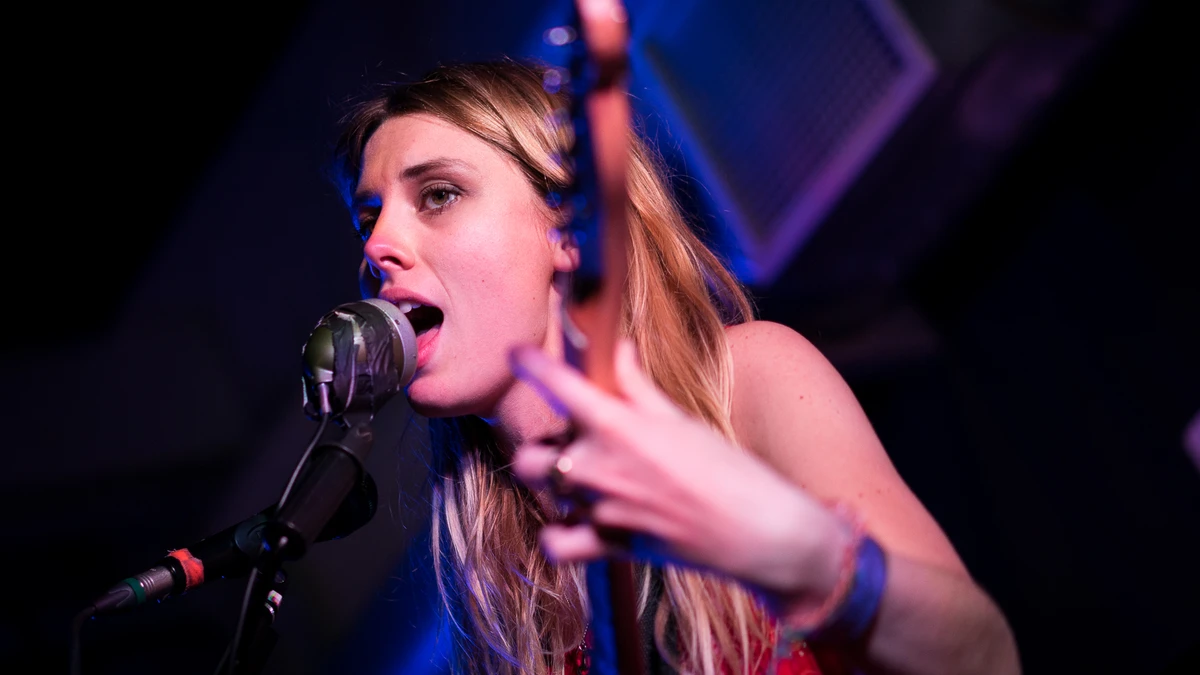
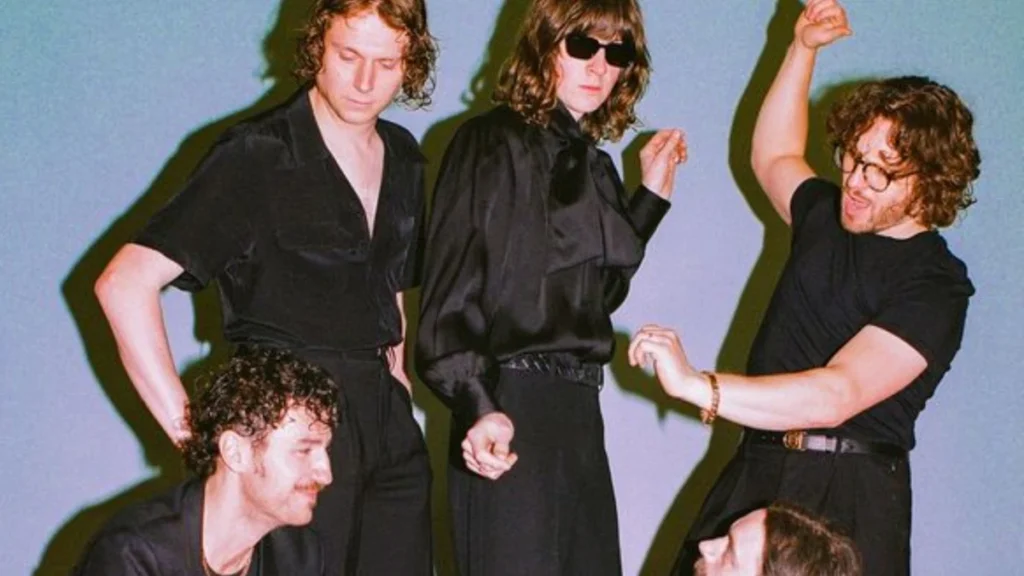
Ellie Rowsell of Wolf Alice, whose Green Man set gave Sunday Light its first live performance.
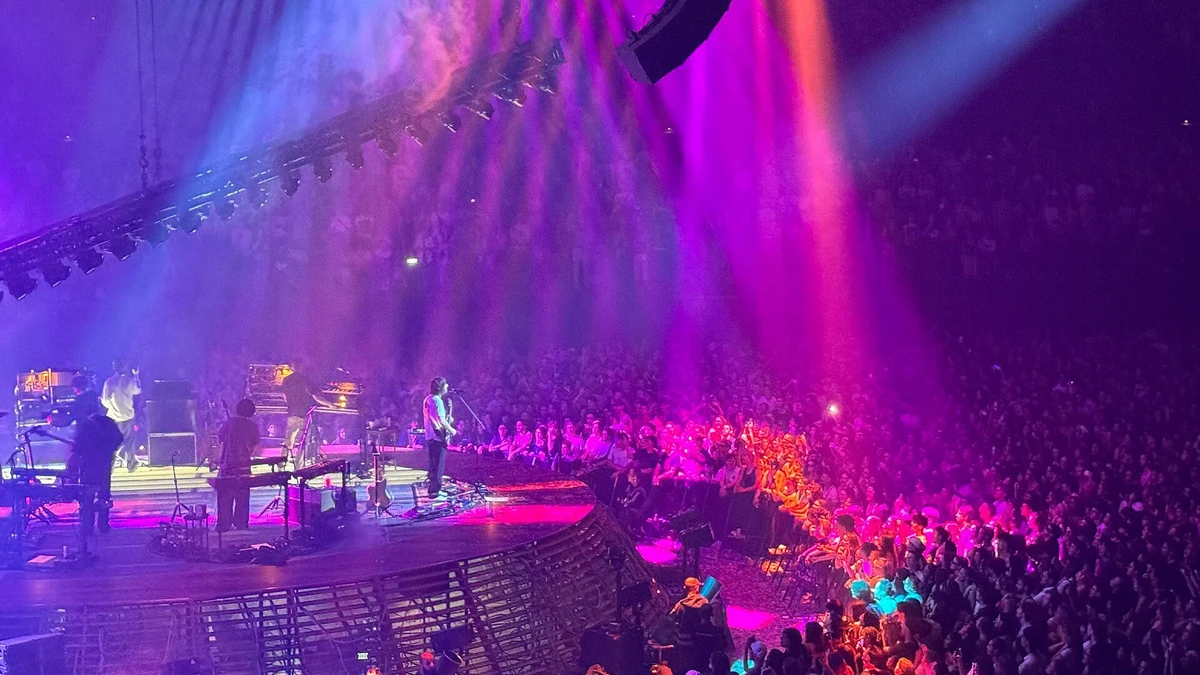
Most festival guest spots are a favour returned in public: an old friend wanders on, plays a verse, waves. What happened on the Mountain Stage at Glanusk Park on Sunday night was a different kind of thing, because the song being played had never been performed by anyone, anywhere.
Wolf Alice at Green Man was already a first — the Welsh festival had never hosted them before. They used it to bring out Anna Calvi and Dove Ellis for the live debut of “Sunday Light”, then kept both guests on stage for a cover of Mazzy Star’s “Fade Into You”.
What Happened on the Mountain Stage
The set took place on Sunday 23 August at Green Man, held at Glanusk Park in Crickhowell, Wales. Per Stereogum’s report, “Sunday Light” was performed live for the first time, with Calvi and Ellis joining Ellie Rowsell on stage.
The band’s own material framed it. NME’s account of the night lists “Bros”, “Don’t Delete The Kisses”, “Moaning Lisa Smile” and “Giant Peach” among the songs played, and notes this was the band’s first ever Green Man appearance.
Footage of the Mazzy Star cover circulated on social media the following day, which is how most people outside Crickhowell encountered it.
The billing explains part of how this was possible. Green Man ran from 20 to 23 August in the Brecon Beacons, and per NME’s lineup announcement the four headline slots went to Mogwai on Thursday, Wilco on Friday, Four Tet on Saturday and Wolf Alice closing on Sunday. Anna Calvi was on the same bill in her own right.
That detail matters more than it looks. A song with four credited vocalists spread across four projects gets played live when the diary accidentally puts enough of them in the same field. A festival that had booked both Wolf Alice and Calvi created exactly that window, and the band used it rather than letting it pass.
The Song That Had Never Been Played
“Sunday Light” is not a Wolf Alice song in the ordinary sense. It is a collaboration credited to Anna Calvi, Nilufer Yanya, Dove Ellis and Rowsell, released on HELP(2), the War Child Records benefit compilation that came out in March.
That authorship is why the live debut took this long. A track written and sung by four artists from four different projects has no natural home in anyone’s set. It needs an occasion where enough of the voices are in the same field on the same evening, which is a scheduling problem rather than a musical one.
Three of the four were there. The song’s producer, James Ford, has described wanting “multiple voices” on it, and characterised the result as “a very heavy, mournful, almost funeral march of a song, but it’s really beautiful”. Performed by three of its authors in front of a festival crowd, that description sets a high bar — and explains why it was not attempted casually.
The Compilation Behind the Song
HELP(2) came out on 6 March through War Child Records, and it is a deliberate echo of a specific piece of music history. The original HELP, released in 1995, was recorded in a single day and raised more than 1.2 million pounds for children caught in the Bosnian conflict.
The sequel was assembled with Abbey Road Studios. In the studio’s announcement of the record, War Child sets out the scale of the problem it is aimed at: the charity works across 14 countries including Sudan, Gaza, Ukraine and Syria, and notes that where roughly one in ten of the world’s children were affected by conflict when the first album appeared, the figure is now close to one in five, or some 520 million children.
Rich Clarke of War Child UK framed the record as “more than an album”, calling it “a powerful example of what can happen when the music industry comes together around a shared purpose”. James Ford, who produced “Sunday Light”, said he felt “incredibly honored” to be asked, and that “helping children in war zones seemed like a no brainer”.
Which is the practical reason a live debut is worth noting at all. Charity compilations are easy to buy and easy to forget, because no single artist is promoting them as their own release. A performance in front of a festival crowd does the work a press release cannot.
Why the Mazzy Star Cover Fits
Following a funeral-march collaboration with “Fade Into You” is a considered piece of set construction rather than a crowd-pleasing swerve. Mazzy Star’s 1993 single is built on space and restraint, and it is one of the few songs in the alternative canon that can absorb three vocalists without turning into a shouting match.
It also sits close to where Wolf Alice’s recent work lives. Their fourth album leaned deliberately away from their loudest register, and a slow, sustained cover is a more natural landing point from that material than a sprint through an early single would have been.
The practical logic matters too. Once you have two guest vocalists on stage, the second song has to justify keeping them there. A cover everyone in the field knows, with room for three voices to trade lines, does that better than a second unfamiliar collaboration would.
The Album Anniversary Sitting Underneath It
The timing was not incidental. The set fell almost exactly a year after The Clearing, the band’s fourth album, which arrived on 22 August 2025 through Columbia.
In its five-star review of the record, NME described an album that “swaps the harder, faster side of Wolf Alice’s oeuvre for more layered, nuanced, slower-tempo songs”, reading it as the sound of a band settling into a calmer register without losing definition.
A year on, the Green Man set is the live argument for that shift. A collaborative charity track and a Mazzy Star cover are both choices that only work if a band is comfortable holding a large crowd quiet, which is precisely the capability the album was reaching for.
What This Says About Where the Band Is
Bassist Theo Ellis has said of the record that “it was a challenge making this record, and it’s quite challenging to play some parts of it live”. That is an unusually direct admission, and the Green Man set reads as a response to it: rather than routing around the difficult material, they added a song nobody in the band had ever performed.
There is a broader pattern here in how collaborative records actually reach audiences. A compilation track can be commercially invisible — it lives on a release nobody treats as anyone’s album — until someone puts it on a stage. The performance is what converts a credit into a song people go looking for, in much the same way that the room-in-the-room approach we covered on a recent album built by passing the mics around a kitchen made its collaborative method audible rather than merely credited.
For a first appearance at a festival, it is also a confident use of the slot. Debuting an unperformed song in front of an audience that cannot sing along is the opposite of a safe headline set. Wolf Alice at Green Man chose the version that could not be rehearsed into a guarantee, and the footage travelled precisely because of it.